Barns Designed for Equine Health and Weather
Horse Barn Shelter in Fairfield for equine operations requiring superior weatherproofing and respiratory ventilation
Horses confined in poorly ventilated structures develop respiratory issues faster than most livestock, especially when moisture from respiration and waste accumulates without adequate air exchange. Hay Pimp Enterprises designs and builds horse barn shelters throughout the Fairfield area and Great Falls region, creating enclosures that balance Montana's extreme cold with the ventilation requirements essential for equine health. Ranch operations managing horses through winter understand that inadequate shelter forces animals into conditions that stress respiratory systems, degrade hoof health, and increase feed requirements as horses burn energy maintaining body temperature.
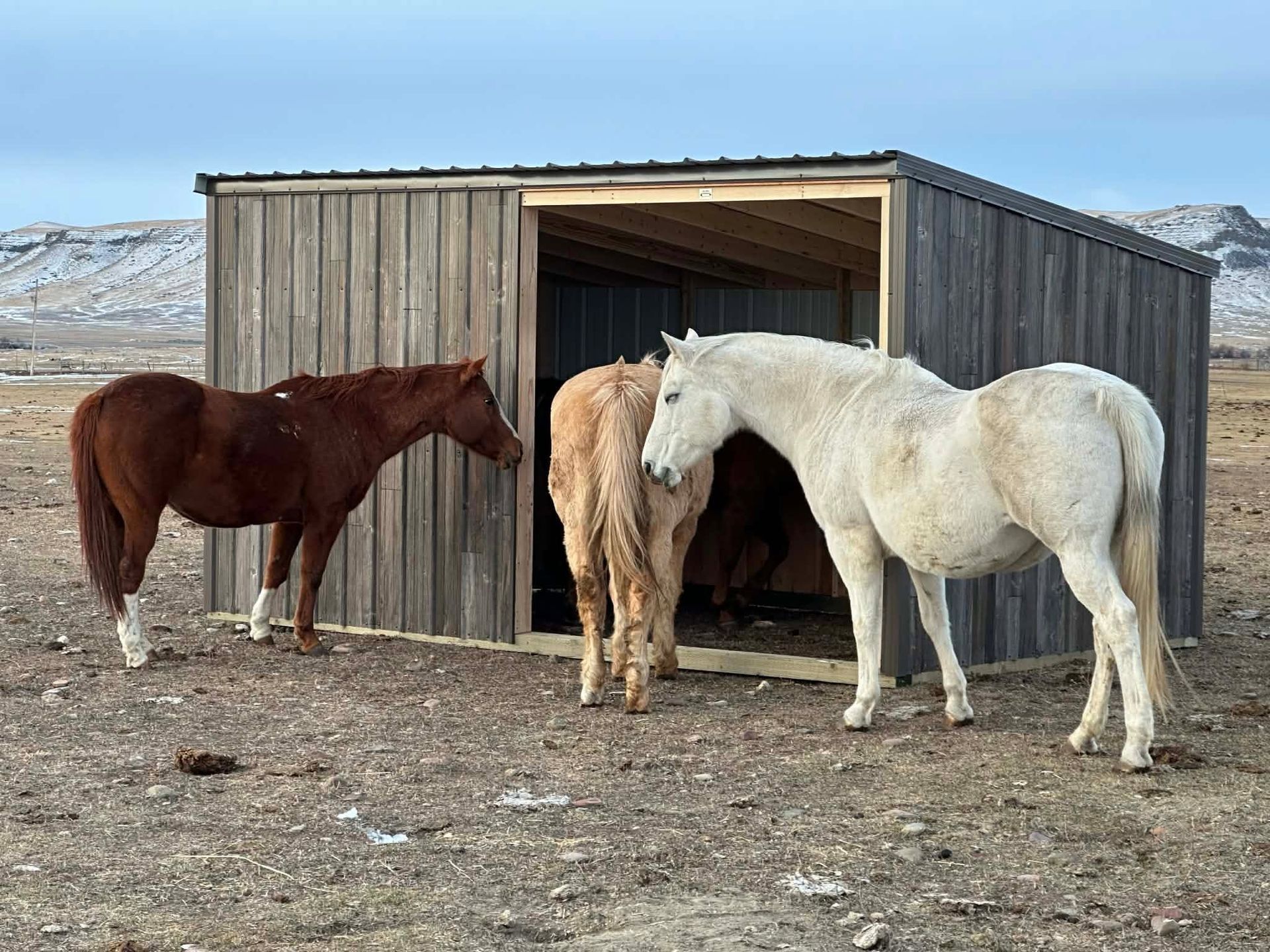
Lean-to and shelter designs incorporate proper roof pitch for snow shedding, preventing the dangerous accumulation that collapses inadequate structures during heavy Montana winters. Ventilation systems function without creating drafts at animal level, and framing withstands both snow loads and the lateral forces from sustained wind. These design considerations directly affect whether horses remain healthy through months of cold exposure or develop chronic respiratory conditions that reduce performance and increase veterinary costs.
Arrange an on-site evaluation to review your current facility limitations and herd-specific shelter requirements.
How Shelter Design Addresses Respiratory and Weather Challenges
Horse-specific enclosures require different ventilation calculations than cattle or sheep shelters because horses generate more respiratory moisture per animal and spend more time in confined spaces. The roof pitch must exceed minimum code requirements to shed snow actively rather than relying on melting, and framing intervals are tightened to handle the concentrated loads that develop when snow accumulates unevenly. Door placement and overhang design prevent snow and rain from blowing directly into the structure during storms, keeping bedding dry and reducing the bacterial load that thrives in wet conditions.
Once construction is complete, you'll notice horses spending time inside the shelter voluntarily rather than avoiding it, bedding stays drier between changes, and respiratory symptoms like chronic coughing or nasal discharge decrease significantly. The structure sheds snow naturally during storms rather than requiring manual clearing, and interior temperatures remain stable enough that horses maintain body condition without excessive feed increases.
Multiple shelter styles are available depending on whether you need open-front run-ins, fully enclosed barns with stall divisions, or combination designs that provide both group housing and separation areas. The owner-operated team at Hay Pimp Enterprises works directly with horse owners to match shelter design to management style, herd size, and the specific exposure challenges of your property.
Answers About Horse Shelter Construction
Equine operations in ranch country have specific concerns about shelter performance, from ventilation details to long-term durability under Montana conditions.
What makes a horse shelter different from general livestock enclosures?
Horse shelters require more precise ventilation to prevent respiratory issues, stronger framing because horses can damage structures through kicking or rubbing, and larger door openings to prevent herd crowding injuries during entry and exit.
How much ventilation does a horse barn need in Fairfield's climate?
Central Montana's cold winters require upper-level ventilation that allows moisture to escape without creating floor-level drafts; most designs incorporate ridge vents or gable openings that function passively, exchanging air continuously without mechanical systems.
Why does roof pitch matter more for horse shelters than other livestock buildings?
Horses are more sensitive to structure failure, and collapsed roofs during snowstorms create dangerous situations; steeper pitch sheds snow before loads reach critical levels and prevents ice dams that lead to leaks and interior moisture.
What size shelter do I need for my number of horses?
Plan for at least 100 to 120 square feet per horse in group housing, with additional space if you're housing stallions separately or need foaling areas; undersized shelters lead to herd aggression and prevent subordinate animals from accessing protection during weather events.
When is the best time to build a horse barn in this region?
Late spring through early fall provides the longest weather windows for foundation work and framing; completing construction before winter ensures horses have access to proper shelter before the first severe storms arrive in November.
Hay Pimp Enterprises builds horse barn shelters with direct experience in equine-specific enclosure requirements and the site conditions common across central Montana. Request a property consultation to discuss your herd size and shelter design options.